
Bezzecchi targets Portimao momentum as MotoGP’s fight for second continues
The Aprilia rider considers this his best MotoGP season yet, but faces a demanding Portuguese circuit while discussing sport, spectacle and his meeting with Jannik Sinner.

5 min read
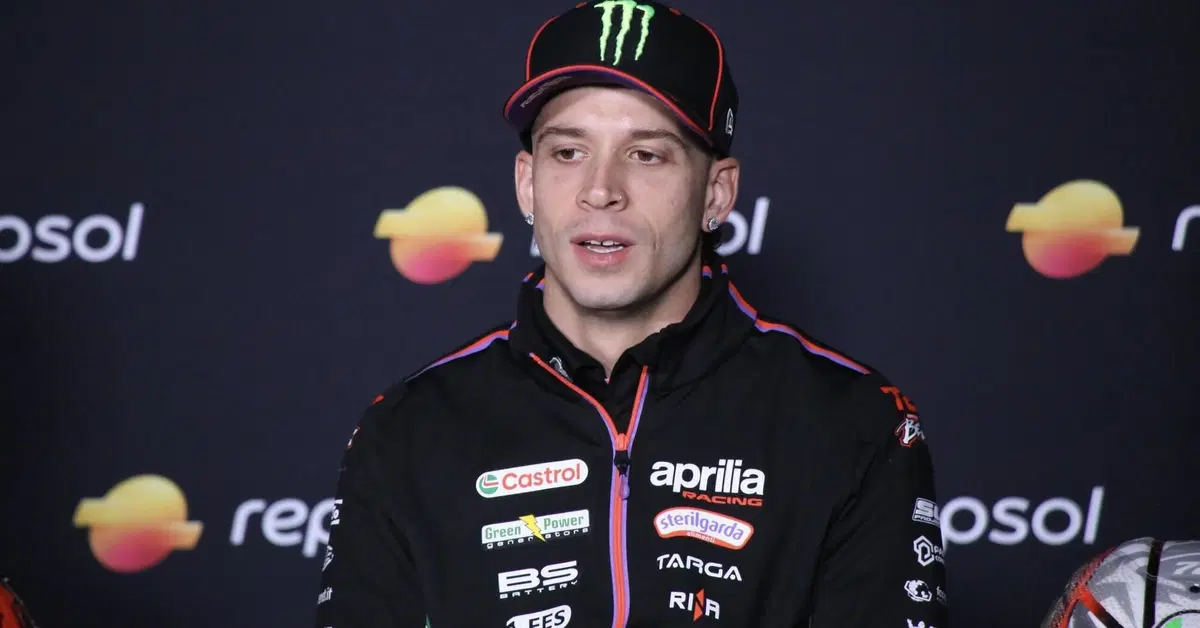
Speaking at Portimão on Thursday ahead of the Portuguese Grand Prix, Marco Bezzecchi described this as the best season of his MotoGP career. The Aprilia rider wants to remain competitive in Portugal and keep alive his chance of finishing second in the World Championship, but he is not treating that position as a consolation prize. For Bezzecchi, it would be an important result and, above all, the consequence of doing consistently good work.
His immediate priority is to extract the best possible result from the weekend. That means pushing for a strong qualifying position, a competitive Sprint and a good Grand Prix rather than choosing one target in advance. Bezzecchi acknowledged that winning all three is difficult, as it always is in MotoGP, but said the difficulty should not make the Aprilia side approach the weekend with less ambition. His plan is to begin immediately and tackle this event in the same way as the previous ones.
The rider also sees the season as a collection of contrasting lessons. He described it as highly positive overall, while recognising that it has included difficult moments. The good phases can show which choices and methods are producing results, but the tougher periods can teach even more. Bezzecchi’s aim is to gather both kinds of experience and direct them towards improvement for the future, rather than carrying only the pleasant memories into the next campaign.
Why Portimao demands a complete lap
Bezzecchi does not identify one isolated corner as Portimao’s defining problem. In his view, the entire circuit is attractive but exceptionally difficult, largely because of its extreme sequence of climbs and descents. Other tracks also feature elevation changes, he noted, but the Portuguese layout makes them particularly pronounced. That alters the rider’s references and gives every part of the lap a role in the overall challenge.
The braking zones are among the most demanding areas. They often arrive with the track dropping away or with the corner entry partly hidden, making it harder to prepare the bike and judge the turn with a complete view. Even so, Bezzecchi considers the broader challenge more important than the individual braking points: finding a smooth flow and linking the circuit’s sections into a genuinely fluid riding rhythm. On a track with such an aggressive profile, that feeling is difficult to establish.
That description also explains why a good lap at Portimao depends on more than outright bravery. The rider must connect changing gradients, blind or downhill braking areas and the different parts of the circuit without breaking the rhythm. Bezzecchi’s comments frame the weekend as a test of consistency and feel as much as speed, with the elevation profile repeatedly challenging the references a rider normally relies on.
The race is still MotoGP’s main show
Bezzecchi was also asked about the wider transformation of MotoGP and the idea that sport is becoming more of a show. He was careful not to pass judgement on other disciplines, saying he did not feel qualified to assess them. For MotoGP, however, his view is that the activity surrounding the race is becoming more show-oriented as the organisation responds to feedback from fans and viewers.
He does not regard that development as inherently dangerous or negative. In his reading, it is a normal part of a changing world: organisers try to provide what audiences want and adjust when necessary. The distinction is that the race itself already supplies the central spectacle. Bezzecchi’s point was that MotoGP is a show because of the race, its speed and its difficulty, rather than because of whatever is added around it. The surrounding presentation may evolve, but he still sees the competition on track as the essential attraction.
A longer conversation with Jannik Sinner
Away from the circuit, Bezzecchi discussed his visit to the ATP Finals in Turin and his time with Jannik Sinner. The two had already met before, so the occasion was not their first introduction. It did give them more time together, though: they had lunch and spoke more calmly than in previous encounters. Their conversation covered tennis, cars and a range of other subjects, with both athletes asking questions about each other’s worlds.
Bezzecchi said the meeting confirmed his positive impression of Sinner, whom he described as friendly, relaxed and easy to be around. He also said they remain in contact outside public events, with conversations going in both directions. His joking response that Sinner had given him “a forehand and a backhand” referred to the tennis player’s advice in a playful way, not to a specific technical lesson.
The Aprilia rider linked that experience to several other meetings with high-level sportspeople, including Alexander Zverev, Valentino Rossi and basketball players. Rather than assuming that elite competitors immediately see one another as equals, Bezzecchi admitted that he is often nervous when meeting athletes he regards as idols. Their ability makes a strong impression on him, and he hopes they can recognise the demands of MotoGP in the same way he recognises the difficulty of their disciplines.
That recognition can work both ways. Bezzecchi explained that he has told other athletes how extraordinary their performances appear, while they have reacted with similar disbelief to MotoGP riders travelling at very high speed. His conclusion is that every sport contains skills that look easy when performed by the best competitors, but become much more difficult when someone tries them personally. That shared discovery is what makes these encounters valuable to him.
Bezzecchi also confirmed that he speaks frequently with Formula 1 driver Kimi Antonelli, after being asked about Antonelli’s supportive comments regarding his future. The two had been in contact and had spoken much as they usually do. A planned gift for Antonelli had not yet been handed over: Bezzecchi said they had not yet met properly and privately, although he confirmed that he had the gift stored away.
THE EVIDENCE BEHIND THE STORY
Sources
Spotted something that needs correcting? Contact the editorial team