
Marc Marquez leaves his racing future open despite Ducati deal
The Ducati rider says two years remain on his contract, but his immediate priority is securing the championship with 14 points still needed.

6 min read
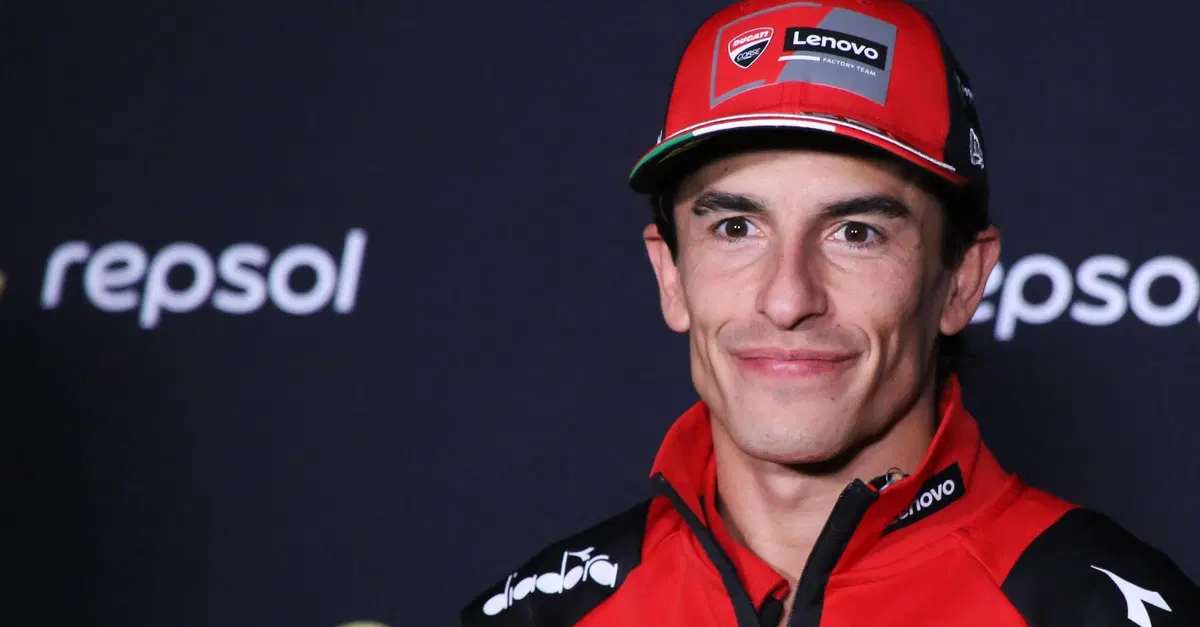
Marc Marquez has not committed himself either way on his racing future. Asked at Portimao whether winning a 10th World Championship title would lead him to retire, the Ducati rider pointed to the two years still remaining on his contract, but stopped short of promising that he will complete them. His answer was not a retirement announcement, yet it also was not the firm continuation statement that would close the subject.
For Marquez, the immediate issue is not what comes after the title but finishing the campaign in front of him. He said the season has been complicated in several respects, while insisting that he remains very fast. Winning the championship is his first priority; only after that does the work for next season become the main focus. The contract therefore provides context, not a final answer about whether he will keep racing beyond the current objective.
Portimao brings the first effective match point
The Portuguese weekend has a specific competitive importance for Marquez. He described the Qatar round as a mathematical match point, while considering Portimao the first genuinely effective opportunity to close the championship. His calculation is straightforward: he needs 14 points across the next two races. That is the number occupying his mind, rather than the wider speculation surrounding a possible retirement after a 10th title.
His stated approach is to remain concentrated, patient and measured. From outside, the championship may appear almost decided, but Marquez stressed that it is not finished and that anything can still happen in racing. He referred to the sporting danger of assuming a result is guaranteed, using the example of a rider who appears certain to win a cycling event before an injury changes everything. The lesson for him is to push for the required result without taking unnecessary risks.
Marquez also underlined that the next two races are closely linked. An incident in the first would not simply affect that weekend; it could leave consequences for the second. He wants to end the championship as soon as possible, but said that the points have not yet been secured and that calm, concentration and patience are still necessary from the opening practice session onward.
No motorcycle training during the break
That risk calculation influenced how Marquez spent the week before Portimao. He deliberately avoided riding a motorcycle and instead trained on a bicycle using an indoor roller at home. On Sunday, he eventually went out for a short bicycle ride because he needed some fresh air. It was a conscious departure from his usual preparation, made because two races were about to take place in succession.
Marquez explained that his routine has changed over the years. Around a decade ago, he would ride a motorcycle three days a week during the period between races. Later that became two days, and when he has a free weekend now he generally rides only once between events. At Portimao, however, reducing exposure to avoidable problems took priority over that normal routine.
He has treated risk management as one of the new elements of his riding this season, particularly after his injury. During the second half of the campaign, he tried to identify potentially dangerous situations before they became incidents. A cold tyre on the first lap or mixed conditions such as those he encountered in Malaysia can turn a familiar corner into a different problem. The aim is to recognise those variables early and adapt before they produce a crash.
In Marquez's own assessment, that approach has contributed to fewer crashes, or at least better control of difficult situations. He said the second half of the season had brought him fewer falls than any previous comparable period of his career. He was not presenting risk as something that can be eliminated: the objective is to anticipate it and reduce it, because zero risk does not exist in motorcycle racing.
The fastest Marquez and the best Marquez
Marquez draws a distinction between outright speed and the quality of the rider he is today. He considers the Marquez of his first two seasons, and perhaps the 2018 version, among the fastest. He also mentioned 2019 when describing the combination of speed he had at that stage, recalling a run in which he finished first or second in every race except those in which he crashed while leading. His conclusion, however, is that the best Marquez is the current one.
The reason is control. He said that the rider he is now can understand and manage more of what is happening in the moment, even though he cannot control everything. He would have liked to have this mindset at the age of 20, while recognising that the same mentality might have made it impossible to win one of the titles he won earlier. Every stage of a career brings strengths as well as limitations, and Marquez no longer measures himself only by peak speed.
Motivation remains tied to a clear target
Marquez is 33 and said that 18 years of his career have been spent in the World Championship, more than half of his life. He acknowledged that an athlete's career is short and that injuries can change how a rider sees the sport. Before 2020, he said, he had not experienced major physical problems, and the injury that followed altered his perspective considerably. His reference to other long careers was not a prediction about his own retirement date; it was an explanation of how personality, injuries and individual circumstances shape that decision.
He also admitted that difficulty and pain reduce the enjoyment of racing. Last season, he said, things came more easily, whereas this year has demanded more work and a different method. A real objective can nevertheless cover some of the other problems mentally. Because he is currently winning, he continues to enjoy the season, although he described that enjoyment as different from before rather than simply easier.
Marquez refused to decide in advance whether this will become one of the best championships he has won. He wants to reach the objective first and hopes to answer the question at Valencia. That timing captures the situation clearly: the sporting task has a precise figure attached to it—14 points from the next two races—while the question of what follows the title remains deliberately unresolved.
THE EVIDENCE BEHIND THE STORY
Sources
Spotted something that needs correcting? Contact the editorial team