
Bezzecchi’s medium-tyre gamble falls short in the Motegi Sprint
Marco Bezzecchi explains the thinking behind his medium rear tyre choice and the open tyre question for the Japanese Grand Prix.

2 min read
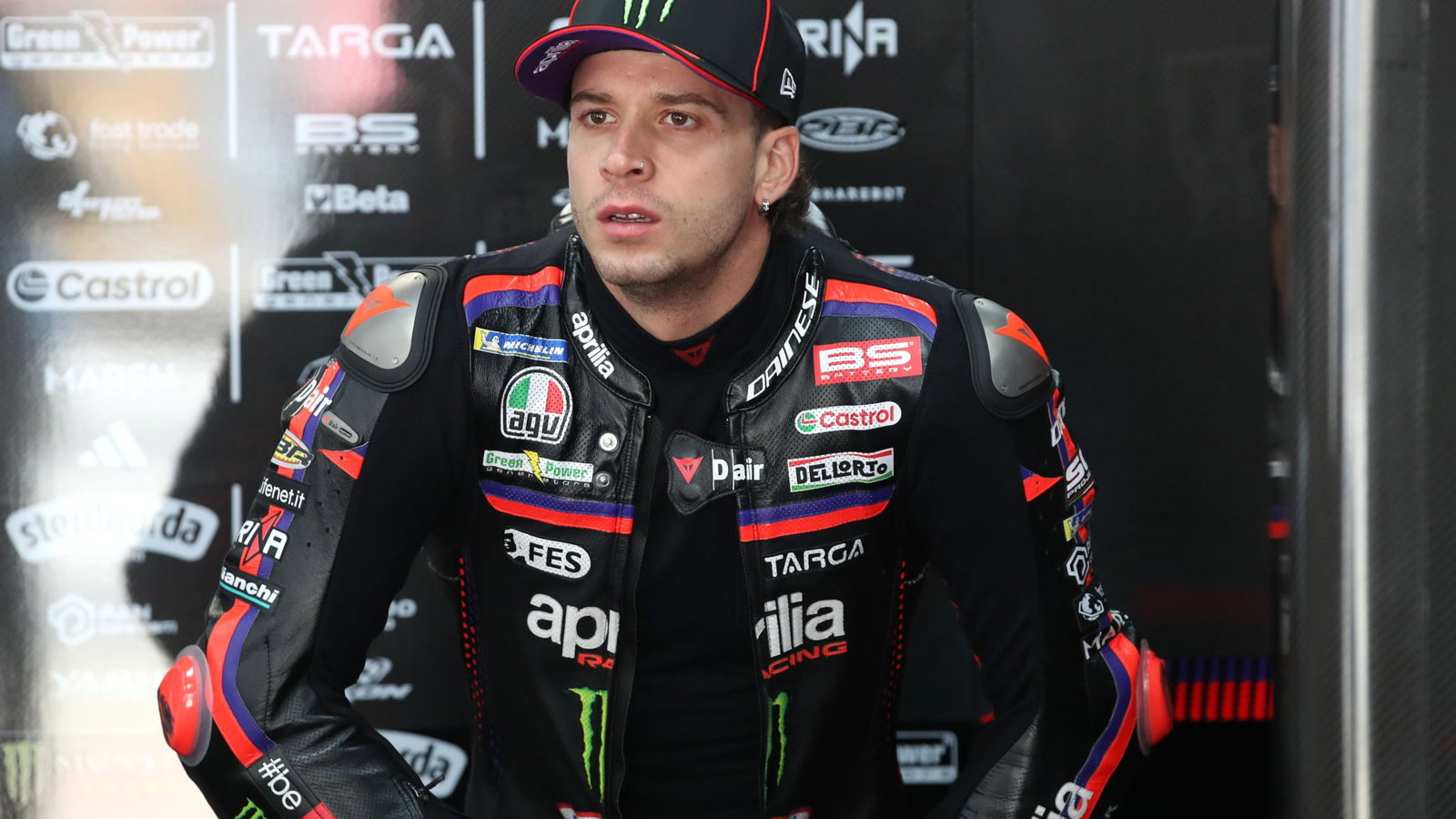
Marco Bezzecchi chose the medium rear tyre for the Japanese MotoGP Sprint, aiming to control temperature and preserve stronger performance for the closing stages. The plan did not translate into the expected result. The Aprilia Racing rider started fourth and reached third by the third corner after passing Pedro Acosta. He then began to lose ground as the riders around him, all on soft rear tyres, had considerably more performance from the opening laps. Acosta was later taken out by Alex Marquez before the first sector was complete.
The thinking behind the choice
The decision followed a specific concern rather than a simple attempt to gamble on a different compound. Bezzecchi had run the medium in FP2 at a pace in the 1m43s range and felt that the rear tyre was already close to its temperature limit. The medium therefore appeared to offer a lower thermal risk. His expectation was that he would need to manage the opening two to two-and-a-half laps, after which he would be confident in the choice and able to benefit from its expected consistency.
That sequence never arrived. Bezzecchi said he was around one second slower in the Sprint than the pace he had expected, while also declining to explain the difference between his FP2 performance and the race until he had checked the data. His own summary was that the decision had been right “on paper”, but wrong when measured against the result.
The tyre question for the Grand Prix
The tyre plan for the full-distance race may be shaped by what happened during the Sprint. Michelin brought a hard rear tyre to Motegi with the same heat-resistant construction used in Austria, as a precaution for the circuit’s new surface. The concern grew after some soft rear tyres lost chunks of rubber from the centre of the tyre during the Sprint.
Bezzecchi said the wear on his own medium did not look particularly worrying, but that does not remove the uncertainty of covering 12 laps on the compound. If the hard rear tyre is made mandatory, he will follow that decision. If the medium remains an option, he plans to study the data before deciding whether it is the better solution for the Grand Prix.
THE EVIDENCE BEHIND THE STORY
Sources
Spotted something that needs correcting? Contact the editorial team ↗