
Aprilia forced tyre-safety action after Motegi Sprint blistering
Massimo Rivola said hidden rear-tyre damage made the Japanese Grand Prix a safety concern, prompting Michelin to withdraw the soft option.

3 min read
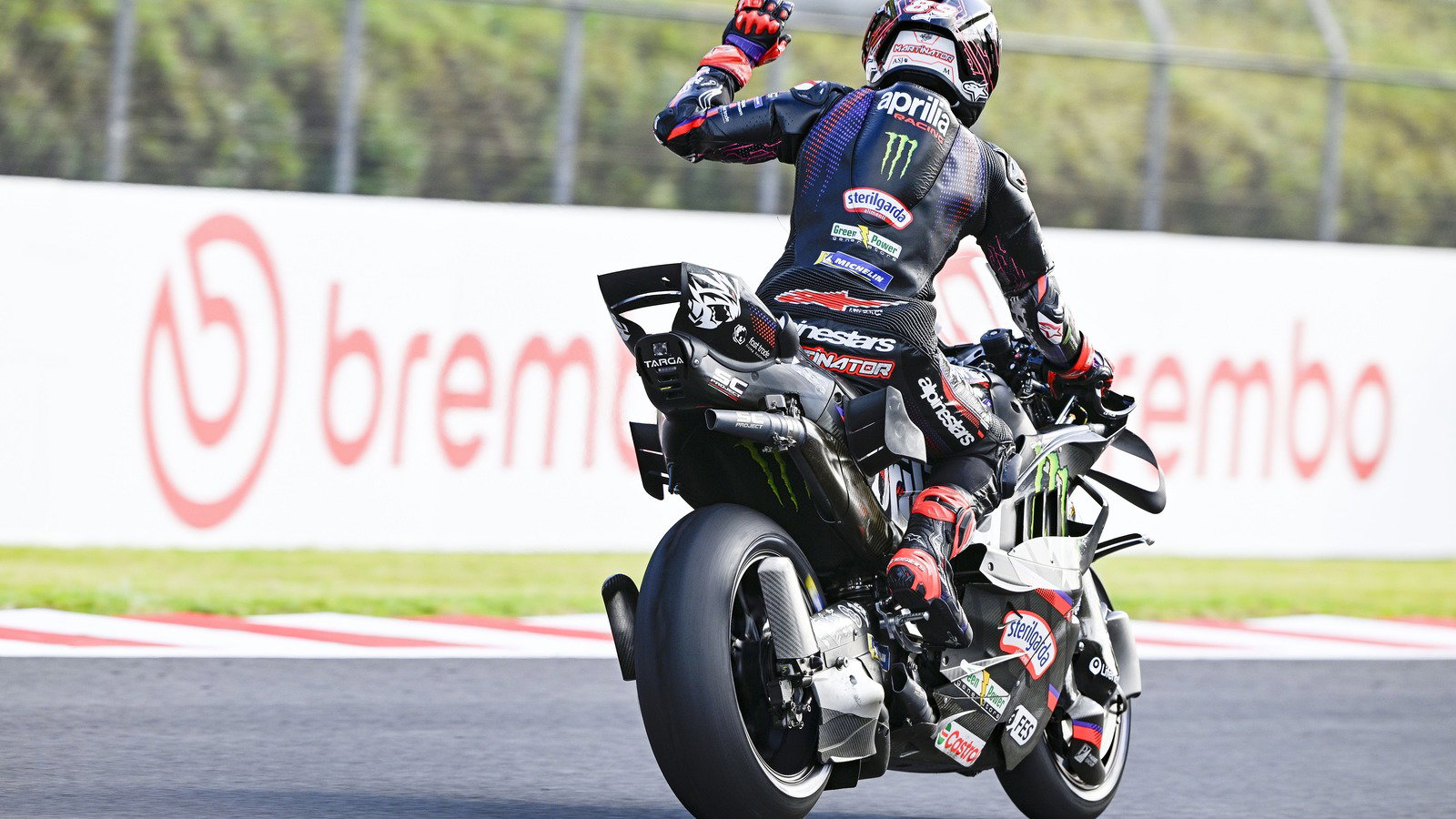
Aprilia Racing pushed for changes to the MotoGP tyre allocation after the Motegi Sprint exposed serious blistering on the rear tyres. CEO Massimo Rivola called the situation a clear safety issue, warning that the damage was not always visible from the outside. Tyres that appeared intact were later found to have blisters forming internally when they were cut open, raising the possibility that the problem could emerge during a longer race.
Jorge Martin was among the riders worst affected by the soft rear tyre. Rubber coming away from his Aprilia RS-GP damaged the bike’s rear wing, while Ducati’s Pecco Bagnaia retired with one lap still to run in the Sprint. Rivola said other riders had experienced the same problem, and that internally damaged tyres were found even when no external blistering could be seen. He argued that the risk was especially concerning because the Grand Prix would run for twice as many laps as the Sprint.
The medium rear also raised concerns. Internal blistering was found in Marco Bezzecchi’s tyre, while Yamaha’s Jack Miller, the only other rider using that compound, had already reported extensive visible blistering. Rivola said Aprilia approached the issue directly as a safety matter and had to push for a solution as a single team. He added that he knew some others had opposed the change, although he did not identify them.
Michelin removes the soft rear
Michelin subsequently withdrew the soft rear tyre from the available choices and recommended the reinforced hard. The option had not been used before Sunday, so the warm-up session was extended to 20 minutes, giving riders more time to evaluate it. Rivola said the hard was considered the safest tyre, and it ultimately performed better than the medium. Every rider selected it for the Japanese Grand Prix.
Rivola also believed the medium should have been excluded because it uses the same construction as the soft. He acknowledged that the outcome could not be known before racing, but argued that the shared construction meant the compound might eventually develop the same failure. In his view, the pieces of rubber that came away from Martin’s tyre and broke the rear wing demonstrated that the issue involved a genuine danger rather than only a performance inconvenience.
Marc Marquez won the Japanese Grand Prix for Ducati, finishing ahead of Aprilia riders Martin and Bezzecchi. The result reduced Martin’s championship advantage over the reigning champion to two points, adding further significance to a weekend dominated by the tyre-safety dispute.
THE EVIDENCE BEHIND THE STORY
Sources
Spotted something that needs correcting? Contact the editorial team ↗