
Ducati Cruiser and Brio: the forgotten scooter chapter
Before closing the book on scooters, Ducati tried two different formulas: an ambitious Cruiser and a more accessible Brio.

2 min read
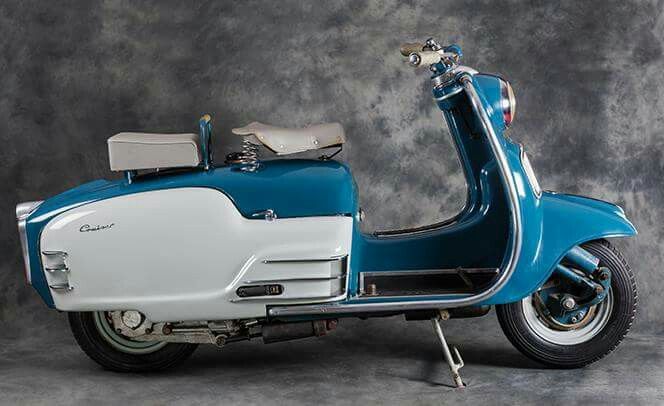
Ducati has a lesser-known chapter in its history: before settling on its established motorcycle direction, the company made two attempts to enter the scooter market. The Cruiser and the Brio came from different periods and targeted different needs, but neither generated the commercial momentum required to keep the effort alive. The chapter ended after the Brio, although the idea of a Ducati sport scooter has continued to resurface through rumours and digital renderings.
The ambitious Cruiser
Ducati’s first attempt appeared at the 1952 Milan Motor Show, at a time when the company was known mainly for the Cucciolo. The Cruiser was large by contemporary scooter standards and used a 175 cc single-cylinder four-stroke engine. Ghia handled its design, giving the scooter styling influenced by the large American cars of the post-war period. It was an ambitious move towards a more upmarket and technologically advanced part of the market.
The Cruiser also brought equipment that was unusual for the category. It had an electric starter operated by a switch on the floor, a rear turn signal and a spare wheel concealed beneath the side cover. The scooter weighed 150 kilograms and produced 8 horsepower, a combination that made its performance difficult to match to its size. Its price was another obstacle: at up to 320,000 lire, it cost as much as three Vespa scooters. Sales remained extremely low, and Ducati ended the project a few years after its presentation.
The Brio arrived too late
The second attempt took a more restrained approach. At the beginning of the 1960s, Ducati introduced the Brio, a simple and economical 50 cc scooter designed by Gio Ponti. It appeared in 1963, when the market was already crowded with similar products. Vespa and Lambretta had strong positions, leaving limited room for Ducati’s new entrant.
The Brio sold better than the Cruiser, but not well enough to justify continuing the programme. Both scooters therefore became historical footnotes in the story of the company from Borgo Panigale, and the category never became a lasting part of Ducati’s range. Later rumours about a modern sport scooter keep reviving the concept, but they do not change the historical outcome: Ducati tried scooters twice and then left the class behind.
THE EVIDENCE BEHIND THE STORY
Sources
Spotted something that needs correcting? Contact the editorial team ↗