
Stoner: Rossi’s psychological pressure made me stronger
Casey Stoner describes Valentino Rossi’s attempts to unsettle rivals away from the circuit and the lessons he took from their MotoGP rivalry.

2 min read
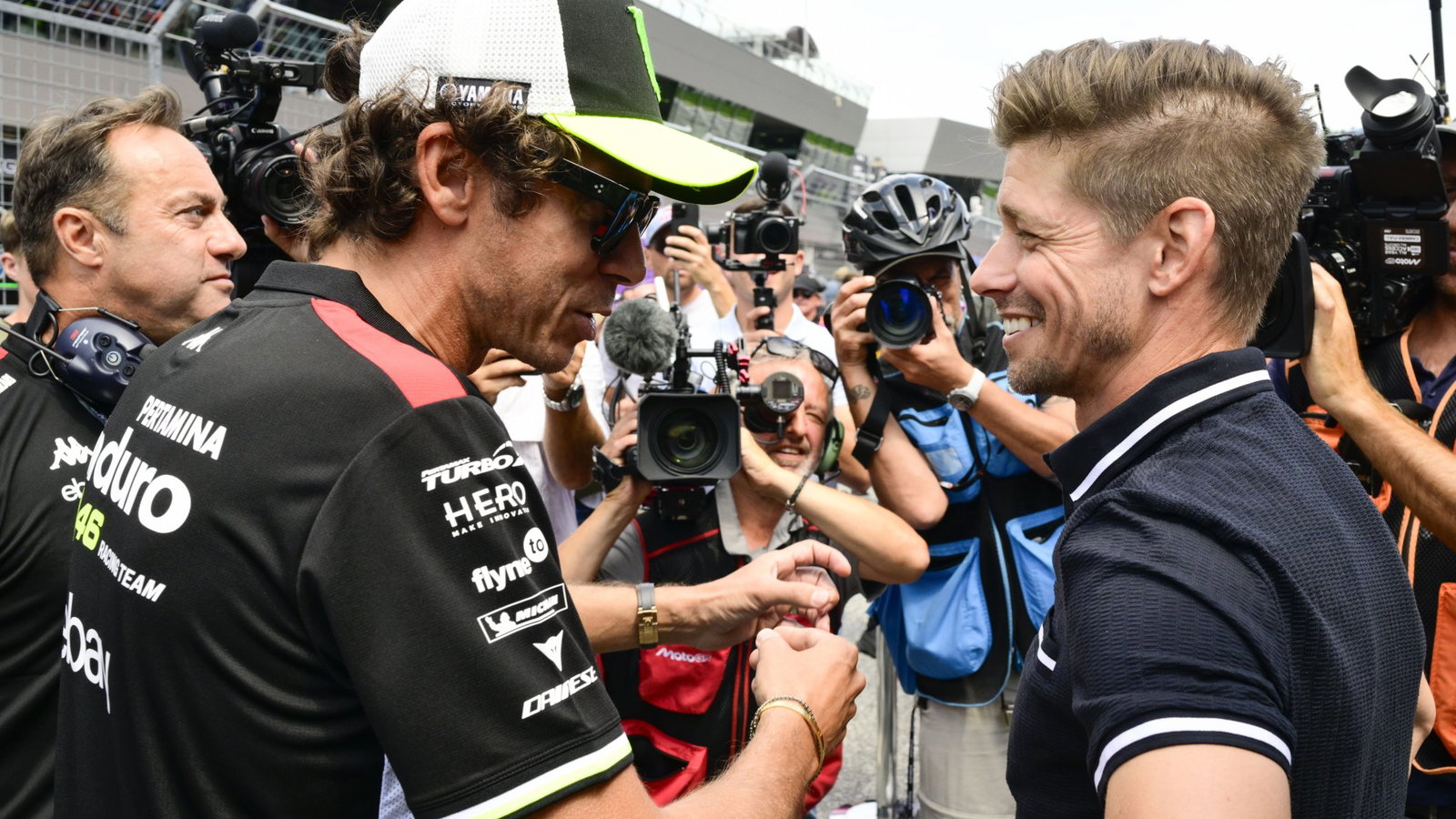
Casey Stoner’s rivalry with Valentino Rossi involved more than what happened during the races. The two-time MotoGP world champion says Rossi tried to influence his opponents away from the circuit, but the approach had a different effect on Stoner. Instead of weakening him, it made him feel stronger and encouraged him to study his rival’s character and likely next move more carefully.
A rivalry shaped by changing momentum
Stoner and Rossi spent several seasons competing at the front of MotoGP. Stoner controlled the 2007 championship with Ducati, finishing 125 points ahead of Dani Pedrosa and 126 points clear of Rossi. The balance shifted in 2008, when Rossi won the title battle against Stoner by 93 points. Their contest at Laguna Seca that year became one of the most memorable encounters between them, combining aggressive racing with the respect that marked several of their battles.
At a Trento Festival dello Sport event earlier in the month, Stoner discussed the methods he associated with Rossi. He said the Italian would try to intimidate rivals away from the track, a tactic that may have worked in some of Rossi’s earlier rivalries. Stoner’s experience was different. He said those efforts did not unsettle him; instead, each attempt gave him another clue about Rossi’s character and about how he might behave next.
The contest beyond the circuit
Stoner also pointed to Rossi’s effectiveness with the media. In Stoner’s assessment, Rossi was very good at bringing people around to his own view, direction and narrative, while remaining highly open in his dealings with the press. That made the rivalry more demanding than a contest of pace, braking and racecraft. Stoner had to consider the public conversation surrounding the competition as well as the events taking place on the circuit.
Despite the differences that developed between them, Stoner continues to recognise Rossi’s importance and achievements. He said he had been a Rossi fan before their racing relationship changed and that he learned both positive and negative lessons from the Italian. His recollection frames Rossi’s influence as something extending beyond results: it also involved reading the psychological environment of a championship fight and shaping the way that fight was understood by others.
THE EVIDENCE BEHIND THE STORY
Sources
Spotted something that needs correcting? Contact the editorial team ↗