
Harley-Davidson will shift its factory racing focus in 2027
The company will leave official King of the Baggers participation after 2026 and expand the FIM Harley-Davidson Bagger World Cup.

5 min read
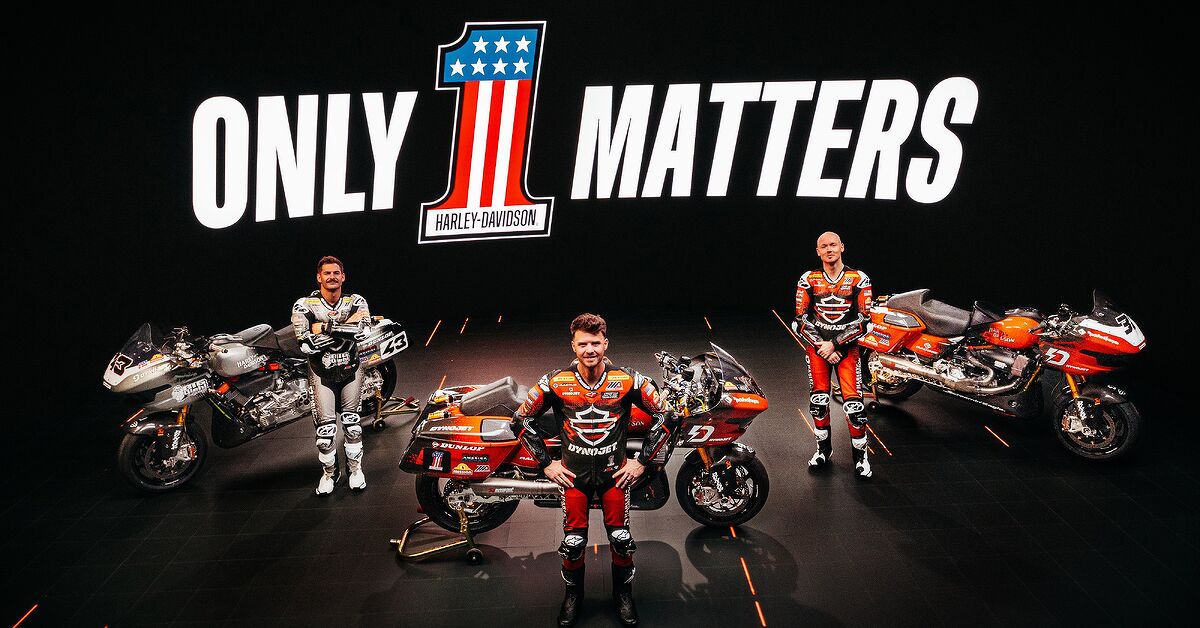
Harley-Davidson will end its factory participation and official team support in MotoAmerica’s King of the Baggers after the 2026 season. From 2027, the manufacturer’s premier racing investment will move to the FIM Harley-Davidson Bagger World Cup, while a separate grassroots programme will target riders and competitors across several disciplines and experience levels.
The decision changes the location and purpose of Harley-Davidson’s official effort rather than ending the company’s involvement in bagger racing. Its new plan combines an international championship linked to MotoGP, IRTA and FIM with more accessible opportunities that can take place at local drag strips, flat-track events and dealer-organised challenges. Harley-Davidson President and CEO Artie Starrs described the approach as a way to put its fastest motorcycles on a major stage while extending competition to a wider group of riders.
The World Cup becomes the main factory platform
The FIM Harley-Davidson Bagger World Cup is still at an early stage, but the company says its first season provided a strong base for expansion. The inaugural championship featured 16 riders and appeared at six MotoGP rounds, producing 12 races in total. For 2027, Harley-Davidson has confirmed that the series will grow to include additional teams, riders and races. The expanded entry list and calendar are due to be announced in the coming months.
The opening season also supplied the competitive results Harley-Davidson wanted from the project. Five different riders won races, every team reached the podium, and the championship was decided only at the final round. Jeffrey Schuessler, Harley-Davidson’s Director of Global Racing Programs, said the first season exceeded expectations and praised the work of the teams, riders, partners, dealers and wider Harley-Davidson community in establishing the championship.
That record gives the manufacturer a reason to enlarge the series rather than simply maintain it at its original scale. The connection with MotoGP also gives the Bagger World Cup an international setting and a broader platform than the American championship. Harley-Davidson has not yet published the full shape of the 2027 expansion, so the number of new entries, the identity of the additional riders and the final race schedule remain to be announced.
The World Cup is intended to do more than provide racing exposure. Harley-Davidson says it will function as a development and demonstration platform for the company’s performance work, with lessons from competition supporting future motorcycles and race-derived Screamin’ Eagle performance products. Chief Operations Officer Bryan Niketh said the link between track experience and products available to customers is central to the revised strategy. The company also says engineering knowledge built through factory racing will support other performance parts.
The end of the factory programme in King of the Baggers
Harley-Davidson’s factory withdrawal will take effect after the 2026 King of the Baggers season. The manufacturer’s official team has won three of the category’s six national championships, while Kyle Wyman has become the category’s leading individual race winner with 27 victories. The announcement therefore closes a substantial chapter in a championship that Harley-Davidson helped establish and develop alongside MotoAmerica.
Harley-Davidson Technical Director and Factory Racing Team Principal Jason Kehl credited MotoAmerica’s partnership, including the work of Richard Varner, Chuck Aksland, Terry Karges and Wayne Rainey, with helping build the category. Kehl also recognised Indian Motorcycle Racing, whose competition forced Harley-Davidson’s team to raise its performance level. In his view, the rivalry improved the teams, lifted the category and made the victories more significant.
The two manufacturers have exchanged championship success since the category began, with Harley-Davidson taking the titles in odd-numbered years and Indian winning in even-numbered years. Indian riders also won 10 of the first 14 races referred to in the current competition, underlining the strength of the rival factory effort. Indian Motorcycle has committed to racing in 2027, although the future shape and duration of that programme have not been specified.
The effect on MotoAmerica’s class will depend partly on the independent teams. Harley-Davidson’s factory organisation will no longer provide the official manufacturer effort after 2026, but privately run Harley-Davidson Road Glides could still appear in the championship. Those teams would not represent Harley-Davidson Factory Racing, and the company’s official technical resources will increasingly be directed toward the Bagger World Cup and related product development.
Two levels of racing activity
Harley-Davidson is presenting the change as a two-part racing strategy. At the top is the Bagger World Cup, where the company intends to increase the number of teams, riders and races while using the championship to develop and showcase performance technology. Alongside it will sit the grassroots programme, aimed at making competition more approachable for riders with different levels of experience and interests.
Starrs pointed to several forms that this lower-level activity could take: local drag-strip competition, flat-track racing and challenges organised through dealers. The company’s stated goal is to offer more ways for Harley-Davidson riders to compete, from informal local recognition to a podium finish. The programme is broader than a single championship, but its final structure and scale have not yet been detailed.
The practical result is a reallocation of factory resources. Harley-Davidson is leaving its official King of the Baggers operation after 2026, but it is not abandoning the racing category or the performance expertise developed there. That experience will be redirected toward the international World Cup, future motorcycles, Screamin’ Eagle products and other race-derived parts, while the grassroots side is intended to widen participation beyond the factory paddock.
THE EVIDENCE BEHIND THE STORY
Sources
Spotted something that needs correcting? Contact the editorial team ↗