
From paper scrolls to screens: rally navigation’s digital shift
Johnny Campbell describes how digital roadbooks changed desert navigation—and why readable cockpit displays remain essential.

2 min read
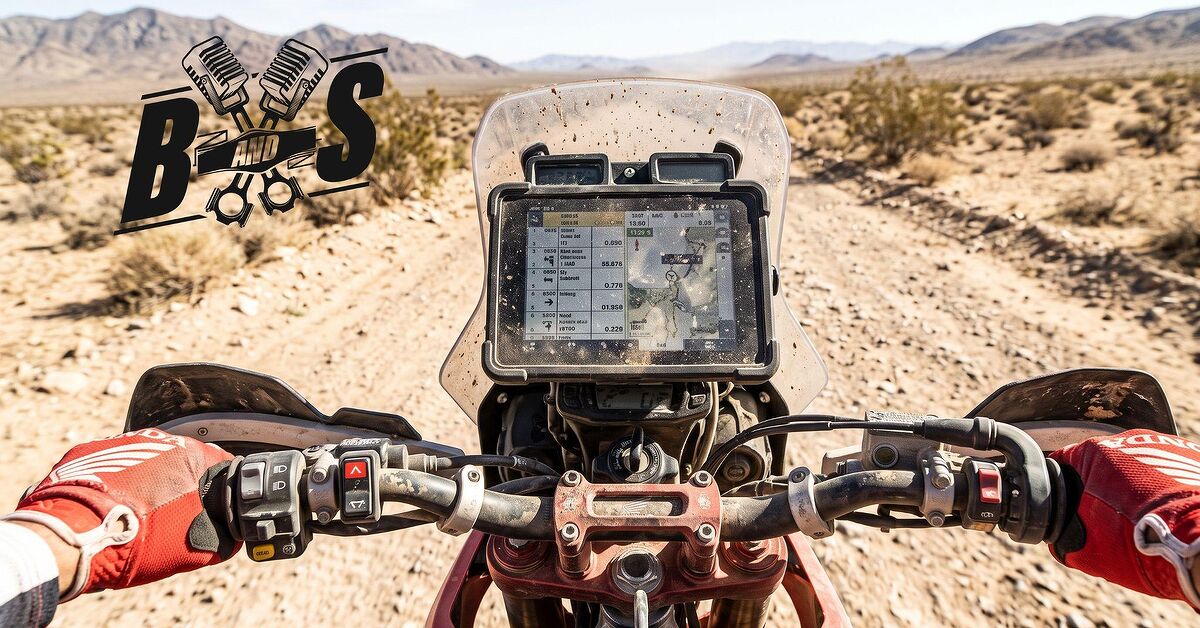
Rally navigation has moved from painstakingly prepared paper scrolls to digital cockpit displays, changing the rider’s job as well as the equipment. Johnny Campbell, an 11-time Baja 1000 winner with 33 years in the desert, was preparing for the 2026 Dakar Rally with his JCR team when he reflected on the difference between the two systems.
Under the old system, riders spent their evenings in motorhomes working on the roadbook. They marked turn points and compass headings with highlighters, building a visual guide for the stage ahead. Today, the organisation uploads the route to the rider’s device shortly before the start. The file is transferred via Bluetooth as the competitor leaves the bivouac, keeping the course secret until departure morning and leaving almost no time to memorise hazards or terrain features.
Why the display matters in the desert
Developing the digital cockpit required years of joint testing by manufacturers such as Honda and race organisers. Desert conditions create a demanding environment for the hardware: intense glare and heat can make the display difficult to read and may even cause a device to shut down. For a rider travelling at very high speed across open, featureless ground, a clear view of the notes is closely tied to safe navigation.
The digital shift has also changed the spectator experience. Live GPS tracking, streaming video and digital connectivity have brought off-road racing much closer to real time for the audience. For competitors, however, the evening work of preparing a paper roadbook has been replaced by the need for a display that remains readable and reliable in extreme conditions. Campbell says screen technology is still evolving so riders can follow their notes safely while travelling wide open across the desert.
THE EVIDENCE BEHIND THE STORY
Sources
Spotted something that needs correcting? Contact the editorial team ↗