
Royal Enfield Himalayan 750: the adventure bike playing by different rules
With 55 CV, air-and-oil cooling and an Italian starting price of €7,390, the Himalayan 750 puts character ahead of the numbers game.

7 min read
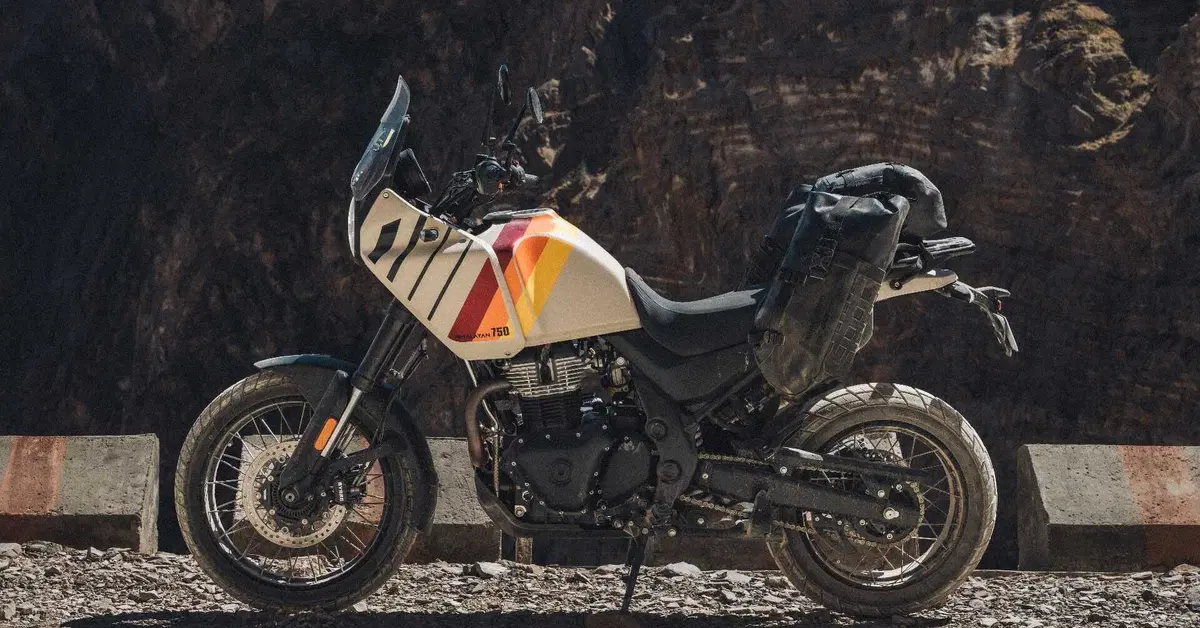
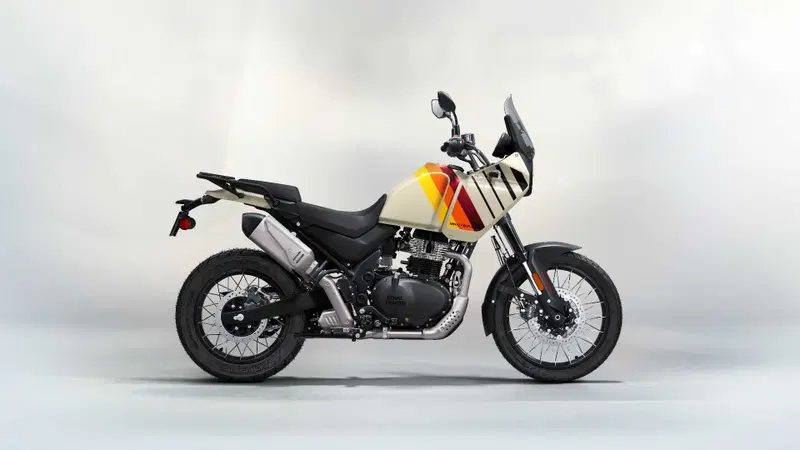
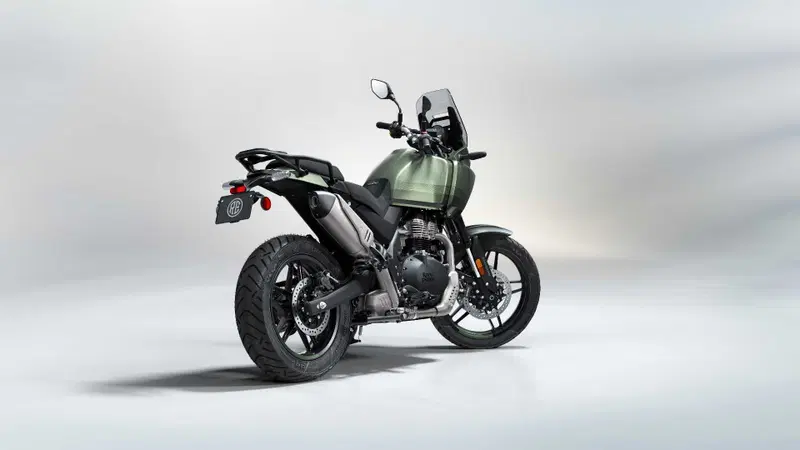
The Royal Enfield Himalayan 750 now has a clear place in the middleweight adventure market. It is neither the most powerful nor the most specialised motorcycle in the class. Instead, it is a different kind of proposal for touring across asphalt and manageable dirt roads. Its 743 cc parallel twin produces 55 CV at 7,000 rpm and 63 Nm at 5,000 rpm. Running-order weight is 223 kg, and the bike uses tubeless 19- and 17-inch wheels.
In Italy, prices run from €7,390 to €9,290 for the Antarctic Silver version with GIVI luggage. That puts the Himalayan close to several more modern adventure bikes, but the comparison cannot be reduced to power, electronics or suspension travel. The 750 is aimed at riders who want mixed-surface touring, classic styling and an engine with a more relaxed personality.
Closer to the 411 than the 450
Its position within the Royal Enfield family explains much of the concept. The Himalayan 450, with its liquid-cooled Sherpa single, moved the range further towards off-road riding than the original Himalayan 411. The 750 takes another route. It is presented as a mixed-surface touring motorcycle, able to cover distance on different roads without claiming to be a specialist enduro and without becoming a GT.
The engine follows the same idea. Its bore and stroke are 83.5 x 67.8 mm, while 90 per cent of its torque is available from 3,500 rpm. The rev limiter arrives at around 7,300 rpm. Those figures point to a full, smooth delivery low in the range rather than a search for dramatic top-end performance.
In an early press test, this behaviour was described as closer to the older air-and-oil-cooled 411 philosophy than to the more urgent character of modern liquid-cooled twins. That does not mean the 750 is misplaced because it does not chase headline figures. Royal Enfield is choosing a different balance: relaxed torque, distinctive design and touring ability instead of outright performance.
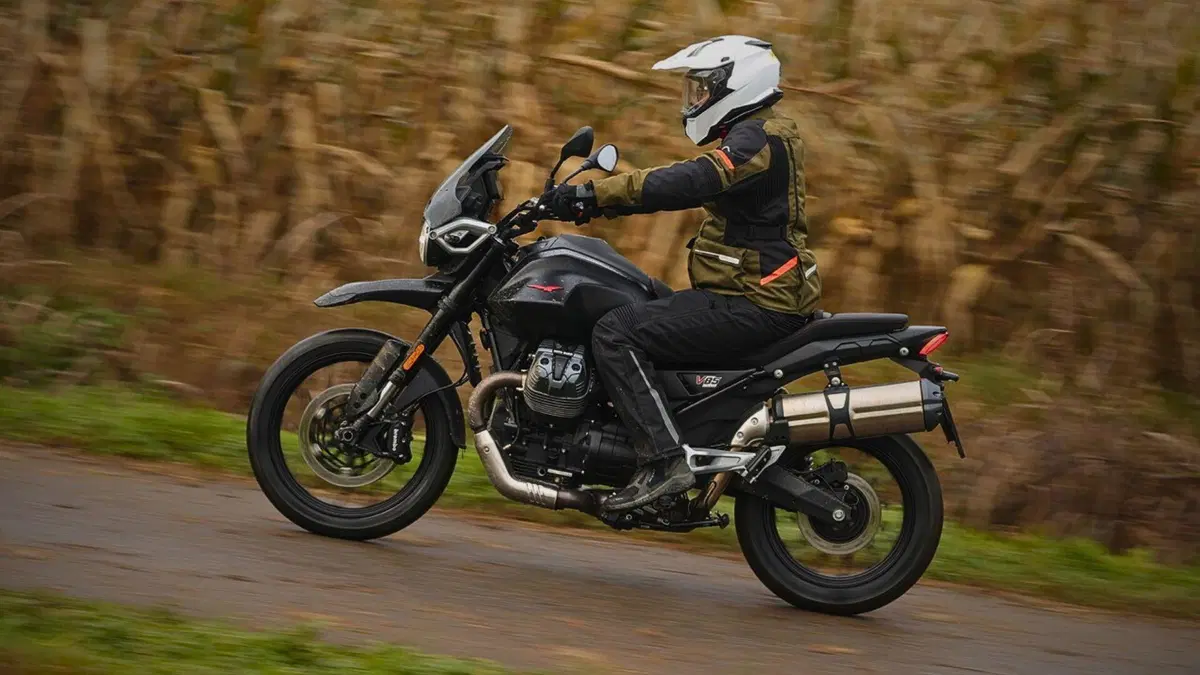
The Moto Guzzi V85 TT follows the closest idea
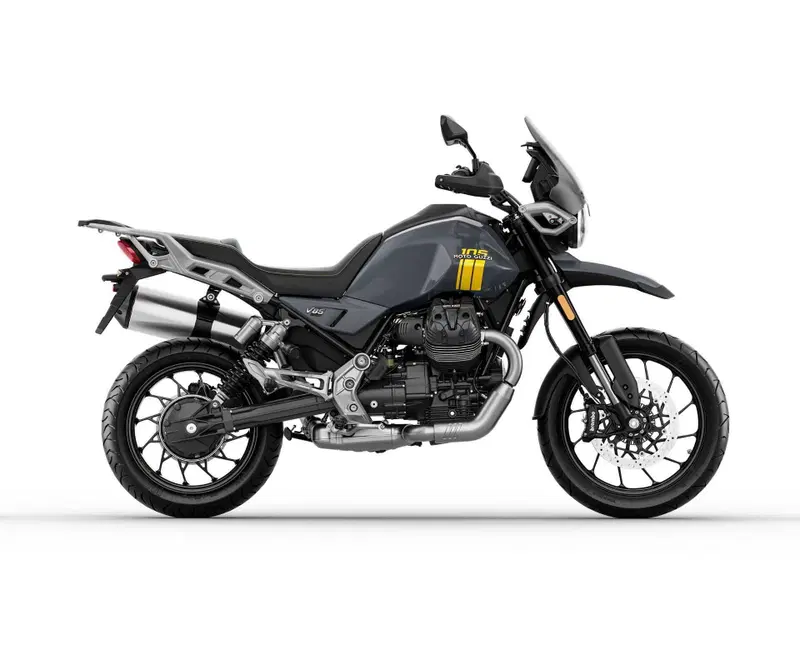
The most direct comparison is not necessarily with the fastest motorcycle, but with the one built around a similar idea. The Moto Guzzi V85 TT occupies the same space of the classic-looking adventure with a touring focus. It has an air-cooled V-twin, styling inspired by 1980s enduro motorcycles and a preference for travel over demanding off-road work. It also uses the same tyre sizes: 110/80-19 at the front and 150/70-17 at the rear.
The gap becomes clear in both power and cost. The Guzzi’s 853 cc V-twin produces 80 CV and drives through a shaft. Its Italian price is quoted at approximately €13,600, while the Strada is listed at €11,100. The Royal Enfield therefore sits considerably lower in price than the Guzzi, even though both can appeal to riders who value identity and character over outright performance.
The V85 TT Napapijri was shown at EICMA 2026 with heated grips and a heated seat, but no price or availability had been announced at the time. That version underlines how important identity and equipment have become in this small but distinctive part of the market. The Himalayan 750 follows the same broad emotional logic with a lower entry point and a clear connection to Royal Enfield’s own heritage.
The rational alternatives from 650 to 900 cc
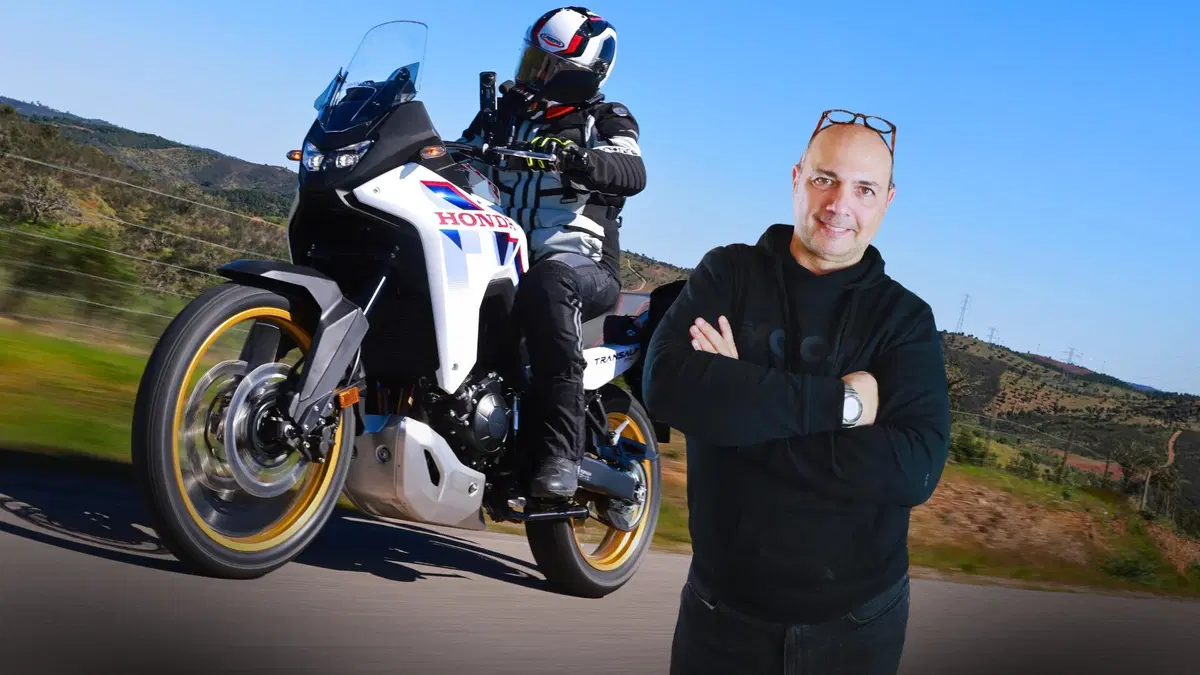
Once the comparison is based on displacement, power and equipment, the list becomes much longer. The Honda XL750 Transalp uses a 755 cc twin producing 92 CV, with 21- and 18-inch wheels and E-Clutch from 2026. Its quoted price is €10,990. Despite the historic name, it is a considerably more modern and performance-oriented motorcycle than the Himalayan.
The Suzuki V-Strom 800DE costs €9,790, while the more road-focused 800SE is listed at €8,890. Both use a 776 cc, 84 CV engine, but the DE has a 21-inch front wheel and a stronger dirt-riding bias. The 800SE is closer to the Himalayan’s touring brief.
The Yamaha Ténéré 700 remains one of the defining choices in the category, with a 689 cc engine producing 73 CV. The standard version is quoted at around €10,999 and the World Raid at €13,199. Its 21/18 wheels and overall off-road focus point to a different priority from the Royal Enfield. The KTM 790 Adventure sits at the sporting end of the class, with 799 cc, 95 CV and a quoted price of €11,290.
The Aprilia Tuareg 660 has 659 cc, 80 CV and a quoted price of €10,800. The BMW F 800 GS is listed with an 895 cc twin, 87 CV and a price of €11,100. These two motorcycles place more emphasis either on motorally specialisation or on modern, all-round touring ability. Neither follows the Himalayan’s exact formula, even though both occupy the same broader displacement range.
For equipment and price, the CFMOTO 800MT-X costs €8,990 and the more touring-oriented 800MT Explore €9,790. Both use a 799 cc engine producing 91 CV. The Voge Valico DS800X Rally is quoted at €8,690, with a 798 cc, 95 CV engine, a 24-litre tank, KYB suspension and 21/18 wheels. Its interpretation of adventure travel is much closer to enduro than to the Himalayan’s relaxed mixed-surface brief.
The Benelli TRK 702 X sits close to the base Himalayan on price, at €7,490. Its 698 cc engine produces 70 CV, and the 2026 range includes heated grips and a heated seat. Its stated 235 kg and different styling make it a direct numerical rival rather than a matching character choice. The Moto Morini X-Cape 700, with 693 cc, 70 CV, adjustable suspension and a seven-inch TFT display, is listed at €7,190 and occupies the same budget territory.
When appearance is part of the decision
For riders who are drawn to the motorcycle’s identity first, there are two more distinct routes. The BMW R 12 G/S uses a 1,170 cc air-and-oil-cooled boxer producing 109 CV and carries a 21-inch front wheel. Its €17,900 price and stronger off-road direction place it in another category, but it is an option for anyone wanting classic adventure styling without compromising on engine size.
The Triumph Scrambler 1200 takes a different path, with 1970s enduro styling, high exhausts and 21/17 tubeless wheels. Its 1,200 cc Bonneville twin produces 90 CV, but it is liquid-cooled despite the external fins. The Scrambler 1200 X, with an 820 mm seat, is quoted at €14,995, while the 2026 XE, with Öhlins suspension and a stronger dirt focus, is listed at €17,195.
The Himalayan 450 remains the logical in-house alternative for riders who prioritise lower weight, greater off-road intent and a more restrained budget. The choice between the two Himalayan models is therefore not simply about displacement. It is also about how touring-oriented or dirt-oriented the rider wants the motorcycle to be.
What the Himalayan 750 is really selling
The Himalayan 750 does not need to beat the Transalp, KTM 790 Adventure or Tuareg 660 on power to justify its place. Its price brings it close to motorcycles such as the Benelli TRK 702 X and Moto Morini X-Cape 700, but its real appeal lies elsewhere: the air-and-oil-cooled twin, the strong low-rev delivery and the connection with the spirit of the Himalayan 411.
In terms of emotion, design and intended use, the Moto Guzzi V85 TT is the closest rival. It offers more power, a V-twin and shaft drive, but requires a noticeably larger budget. The remaining motorcycles are mainly rational alternatives: faster, newer or more specialised. The Royal Enfield is aimed at the rider who wants character and a distinctive road presence, rather than the highest figure in every specification column.
The prices quoted apply to the Italian market and, unless stated otherwise, are list prices. Dealer promotions may change them.
THE STORY IN PHOTOS
7 photos
THE EVIDENCE BEHIND THE STORY
Sources
Spotted something that needs correcting? Contact the editorial team