
MotoGP Qatar: Márquez closes in as Aprilia raises new questions
Márquez was the only Ducati rider in the top seven, while three Aprilia riders finished inside the Lusail top four.

2 min read
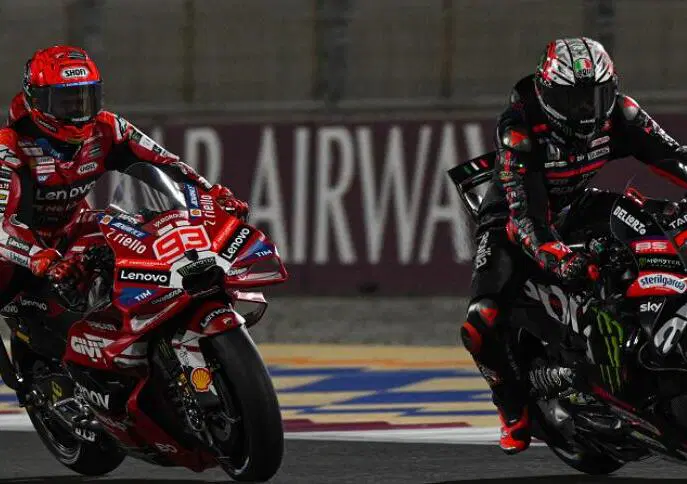
The Qatar Grand Prix moved Marc Márquez even closer to the MotoGP title, while also putting Aprilia at the centre of the weekend’s technical discussion. Three Aprilia riders finished inside the top four at Lusail, and Márquez was the only Ducati rider among the race’s first seven. That combination gives the Qatar aftermath a significance beyond the championship standings: attention is also turning to what allowed Aprilia to produce such a strong showing.
Aprilia’s performance raises questions about the technical advantage it displayed in Qatar, although the discussion involves more than one racing factor. The tyre-pressure regulation once again affected Pedro Acosta’s attempt to fight for a podium place. The Sprint incident between Marco Bezzecchi and Márquez remains divisive, while Jorge Martín contested the Qatar weekend with a broken wrist. Together, those developments added several different strands to the post-race picture.
Aprilia’s technical puzzle
The technical focus includes a new aerodynamic appendage being examined on the swingarms of the factory Aprilia motorcycles. It also extends to the function of the so-called “air pods” when the bike is leaned over, an area that could help explain part of the machine’s track behaviour. Francesco Bagnaia remains another major point of interest after sustaining a double fracture to his right foot. The speed he managed to show in Qatar inevitably raised questions about how he was able to return to a fast pace.
The championship now heads towards Portimão, where the next MotoGP race is scheduled for 21 and 22 November. Qatar therefore leaves three connected storylines: Márquez in an even stronger position in the title fight, Aprilia under close technical scrutiny, and a series of sporting issues involving Acosta, Martín and Bagnaia. The post-race agenda also includes Moto2 and Moto3 as the paddock looks ahead to the next round.
THE EVIDENCE BEHIND THE STORY
Sources
Spotted something that needs correcting? Contact the editorial team