
Maverick Viñales: A MotoGP career of spectacular highs and a difficult finish
Ten wins, four manufacturers, an Aprilia breakthrough and a shoulder injury leave Viñales’ next move uncertain.

5 min read

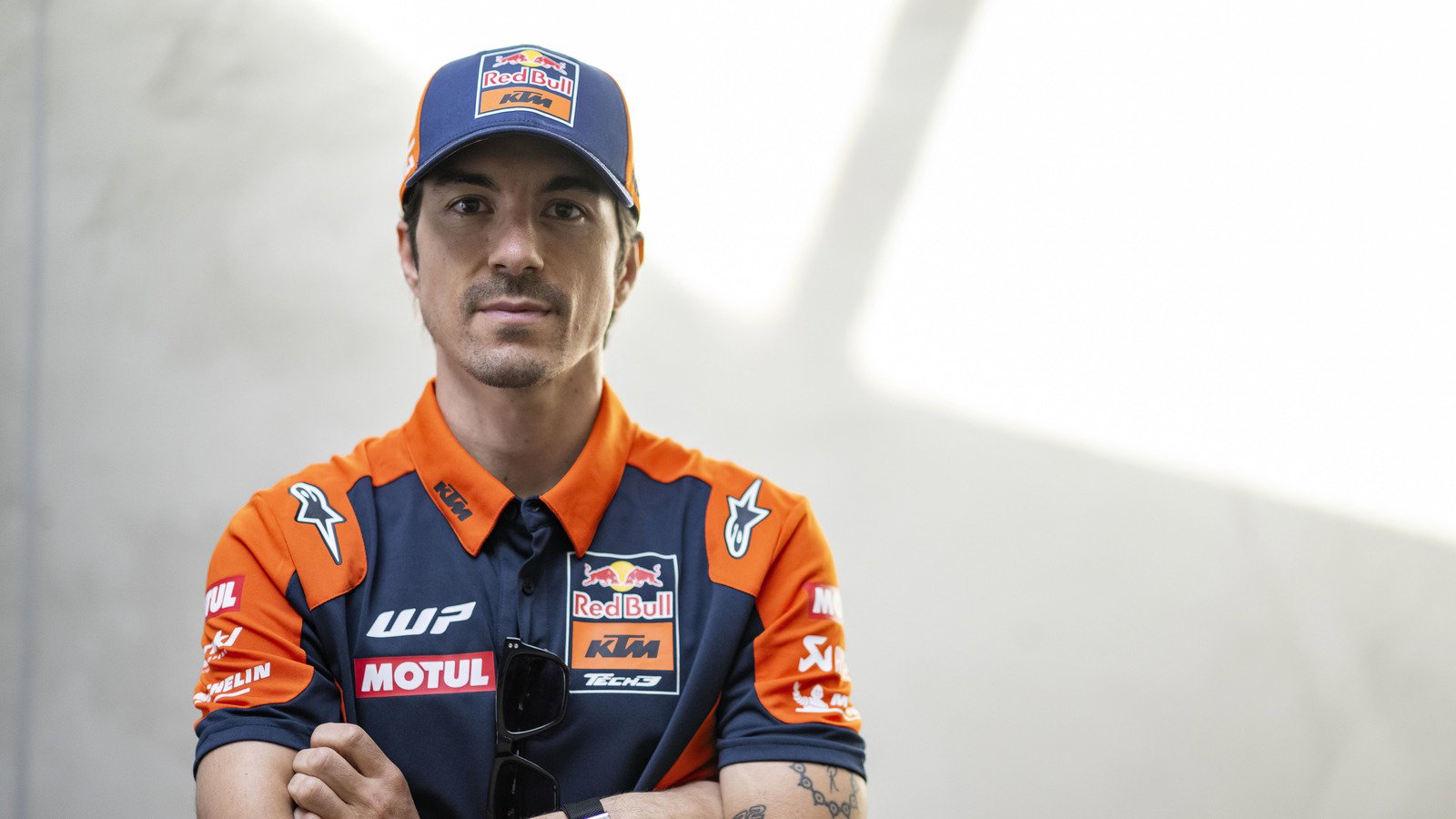
Maverick Viñales’ MotoGP career appears to be reaching its end after 11 years, just over 200 races and 10 victories. Those numbers are significant, but they do not fully explain a rider who periodically looked capable of much more. Viñales raced for Suzuki, Yamaha, Aprilia and KTM, producing flashes of outstanding speed while never finding a consistently stable path. The shoulder injury suffered after his crash in Germany made the next chapter still harder. His last reported appearance was limited to FP1 at the Portuguese Grand Prix, where he was 1.5 seconds off the fastest time.
The talent was visible in Moto3
Viñales had already built a formidable record before reaching the premier class. In 2013 he won the Moto3 world championship after a close fight with Luis Salom and Álex Rins. It remains the first and only Grand Prix world title of his career. He moved to Moto2 in 2014, won on his second race outing and added three more victories, giving him four for the season. He finished third in the standings, extending a run of top-three championship results that had begun with his rookie campaign in the 125cc category in 2011.
Suzuki returned to MotoGP in 2015 and chose Viñales for its next project. A year later, he gave the manufacturer its first victory in almost 10 years by winning the British Grand Prix. That performance quickly attracted Yamaha. For 2017, Viñales took the seat vacated by Jorge Lorenzo, who was moving to Ducati.
The momentum that Yamaha could not sustain
The opening of 2017 created immediate title expectations. Viñales won three of the first five races, with Le Mans standing out after Valentino Rossi crashed on the final lap. The momentum did not last. Viñales failed to win again that season and later argued that Yamaha would have performed better had it kept its 2016 motorcycle.
The next victory came at the 2018 Australian Grand Prix, three rounds before the end of that campaign. From that result until the end of his MotoGP career, Viñales added only five more grand prix wins. His performances became increasingly difficult to predict: he could lose ground in the early stages of a race and then recover strongly in the second half, while Yamaha struggled to find a consistent answer.

Fabio Quartararo’s arrival in 2019 made the comparison within Yamaha unavoidable. Quartararo won three times in 2020 and claimed the 2021 championship, while Viñales managed one victory in 2020. The Spaniard’s relationship with Yamaha deteriorated further. The company first announced an early separation for the end of 2021, but after the Styrian Grand Prix incident, in which Viñales deliberately attempted to damage his motorcycle’s engine, Yamaha ended the partnership sooner.
The Aprilia peak and the move to KTM
Aprilia signed Viñales for the remainder of 2021, and his most striking revival arrived in 2024. At COTA, he won both the Sprint and the grand prix on the RS-GP. It was one of Aprilia’s most important successes, but it did not become the start of another sustained title challenge. Viñales left at the end of 2024 and moved to the factory KTM operation at Tech3.
His start to 2025 was encouraging. In some of the early races, Viñales appeared to extract more from the KTM than even Pedro Acosta. He took a podium in Qatar, but the result was later removed after a tyre-pressure penalty. Then came the crash in Germany and the shoulder injury, which decisively changed the direction of his racing career.
An uncertain next chapter
Viñales, 31, still wants to race in MotoGP. A test-rider role has emerged as one possibility, while links to Ducati remain part of the conversation. Much depends on the condition of his shoulder: experience and technical understanding are useful in testing only if the rider can work without physical restrictions. WorldSBK in 2028 is also presented as a possible route, supported by his experience with Michelin tyres and his record as a race winner.
Before the injury, Viñales appeared fully committed to building a future with KTM. At Silverstone, he said he wanted to create an outstanding motorcycle, pointing to Dani Pedrosa, Pol Espargaró and the team’s technicians. Events moved in another direction, with the relationship deteriorating at a crucial point in his career. Viñales has also claimed that he signed a contract that was later torn up, but the central sporting fact remains unchanged: his return to racing is uncertain.
The final assessment is not one-dimensional. Viñales made his own path harder on several occasions, yet his best performances explain the expectations that followed him: the opening run of 2017 with Yamaha, his 2019 Assen victory after a battle with Marc Márquez, the response he produced in Qatar in 2021 and the Austin double. He also remains the only rider of the modern era to win races on three different motorcycles. Those peaks leave a career that was genuinely significant, while also making its unfinished potential impossible to ignore.
THE STORY IN PHOTOS
5 photos


THE EVIDENCE BEHIND THE STORY
Sources
Spotted something that needs correcting? Contact the editorial team