
Honda reshapes its MotoGP roles for 2027, with Puig as adviser
Alberto Puig explains the handover to Kawase, Honda’s European expansion and why the new 850 still needs time to prove itself.

4 min read
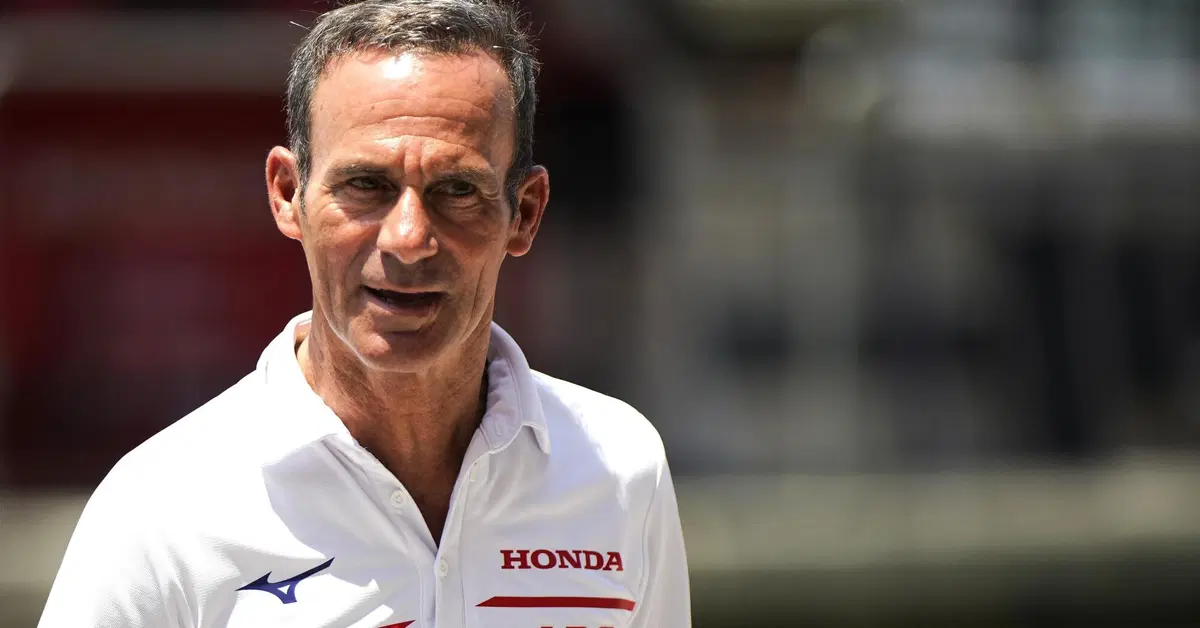
Honda is preparing a change to its MotoGP management structure for 2027 without abandoning its Japanese core. Alberto Puig will move into an advisory role—an advisor, in his own description—and will continue handling many of the activities he manages today, but from further behind the scenes. Kawase, currently Honda’s technical director, has already been chosen as the new team manager.
The move is not being presented as a sudden departure. Puig said he will initially help Kawase because the team covers several different areas and activities that need to be coordinated. Puig has been part of the World Championship since 1987 and has been connected with Honda for more than 30 years, so the change is primarily a redistribution of responsibilities rather than the end of his relationship with the company.
European expertise, Japanese operation
Honda has expanded its European presence. It now has a workshop in Milan with many Italian engineers; Romano Albesiano is already part of that European activity, while Davide Brivio is expected to join the company. The arrangement could suggest that Honda’s racing operation is becoming increasingly Italian, but Puig drew a clear distinction between adding European expertise and changing the company’s identity.
In Puig’s description, Honda is bringing in European personnel to understand the technology being developed in Europe, while the company’s system and central culture remain Japanese. He left open the possibility of future changes, but did not present the European expansion as a replacement for Honda’s existing way of working. In the same conversation, he praised Luca Marini as a rider with whom he has a direct and honest relationship. Puig values Marini’s willingness to absorb information, learn from it and keep working.
Márquez, Quartararo and the new Honda 850
Puig needed little explanation when discussing Marc Márquez. He called Márquez an absolute phenomenon on the track, while also describing him as unusually simple and easy to work with. For Puig, that combination of exceptional sporting ability and straightforward behaviour is uncommon in modern racing.
The question of a possible Honda return for Márquez in 2027 did not produce confirmation of a concrete move. Puig rejected the idea that there had been a specific attempt to bring him back, replying instead that everyone in the paddock talks to everyone. The subject therefore remains a matter of conversations, not an announced agreement.
Puig’s assessment of Fabio Quartararo was unequivocally positive. He considers Quartararo a fast rider whose ability has already been demonstrated, and said that his quality is beyond question. Moving to Honda, however, would take place during a period in which important parameters are changing, including the category and the tyre. It would not mean starting from zero, but it would create a new situation that requires adaptation.
The new Honda 850 made a positive impression during testing in Austria, but Puig refused to turn that showing into a forecast of future race performance. One circuit is not enough for a firm conclusion, while every manufacturer will continue developing its motorcycle until the next championship begins in March. Austria is therefore an encouraging signal for Honda, not a guarantee of competitiveness.
Pedrosa, four great riders and the title fight
Dani Pedrosa remains the rider with whom Puig spent the most time. They met when Pedrosa was still a child, and their joint path led to three world championships: one in the 125 class and two in the 250 class. It also produced many MotoGP victories. Puig described their relationship as intense and complete, while acknowledging that contact cooled in 2018. They spoke again after several years, he said, and there is no longer a problem between them.
Puig avoided reducing Márquez, Casey Stoner, Pedrosa and Jorge Lorenzo to a simple podium. He considers all four outstanding riders, but for different reasons. In his statistical view, Márquez is the most complete and was especially strong physically. Pedrosa achieved an exceptional level despite his smaller build; Stoner had extraordinary natural talent; and Lorenzo was a formidable rider who won five world championships. Working closely with all four, Puig added, helped him understand how to manage Honda teams more effectively.
Puig’s title assessment was given before the Mandalika Grand Prix and included a clear condition. He considered Márquez the favourite if his arm remained at an acceptable physical level through the end of the season. He also acknowledged the speed of Jorge Martín and Marco Bezzecchi, but maintained that Márquez would be an exceptionally difficult rival in the closing stages. Honda, meanwhile, is entering a new management phase that combines greater European input with a core that remains Japanese.
THE EVIDENCE BEHIND THE STORY
Sources
Spotted something that needs correcting? Contact the editorial team