
Dovizioso on the risk behind the Márquez–Bezzecchi Qatar clash
Andrea Dovizioso explains why the television view cannot show everything the riders perceived through Turn 1 in Qatar.

3 min read
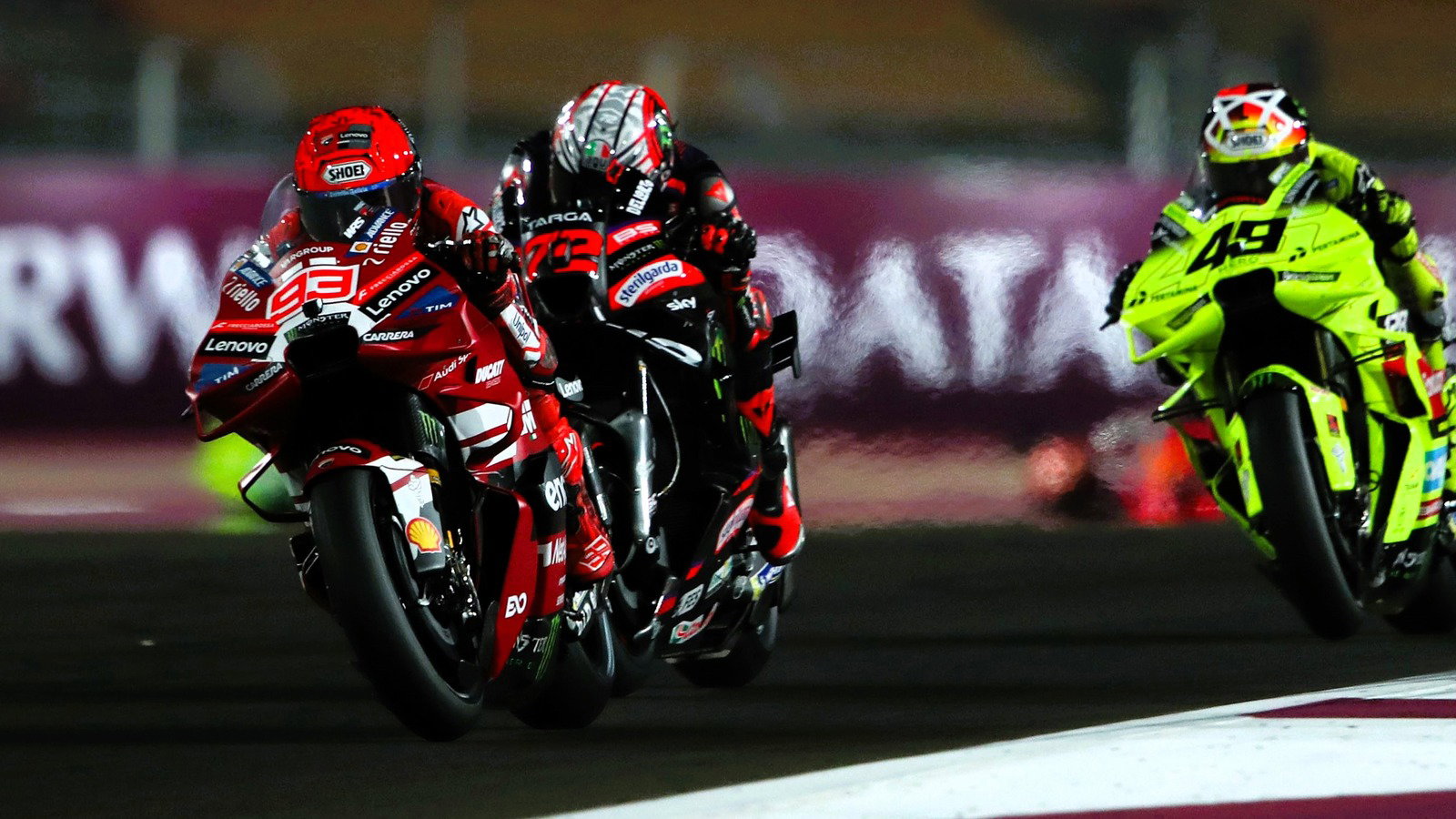
The collision between Marc Márquez and Marco Bezzecchi in the Qatar Sprint unfolded at Turn 1, but Andrea Dovizioso sees more than a simple failed overtaking attempt. The former title contender, runner-up to Márquez in the championship from 2017 to 2019 and now a Yamaha test rider, examined the incident from the perspective of someone who has raced a motorcycle in that position.
Bezzecchi started from pole as the pre-race favourite, yet Márquez moved into the lead early. On lap four of the ten-lap Sprint, Bezzecchi attacked on the inside at Turn 1. Márquez arrived slightly wide, the two Ducati lines converged on the exit and the contact put Bezzecchi on the ground. Márquez’s airbag deployed in the impact, but he stayed in the race and went on to win the Sprint.
What the cameras cannot show
Dovizioso’s reading of the key moment centres on when Márquez became aware of his rival. Márquez lifted the motorcycle at the last instant, which Dovizioso interpreted as a sign that he only recognised Bezzecchi’s presence at that point. A rider can hear another bike nearby without knowing precisely whether it is one metre ahead or one metre behind. Restricted peripheral vision inside the helmet, combined with the body position required on a modern MotoGP machine, makes the situation much less obvious from the seat than it appears in a broadcast replay.
Dovizioso said Márquez was braking very hard because he sensed Bezzecchi was making a move. Márquez ran roughly one metre wide, but that did not necessarily place him outside the normal racing lines. Qatar’s first corner allows several fast approaches, with some lines separated by three or four metres. Bezzecchi saw an opening and committed because the inside remained a usable line for him.
The price of the Sprint zero
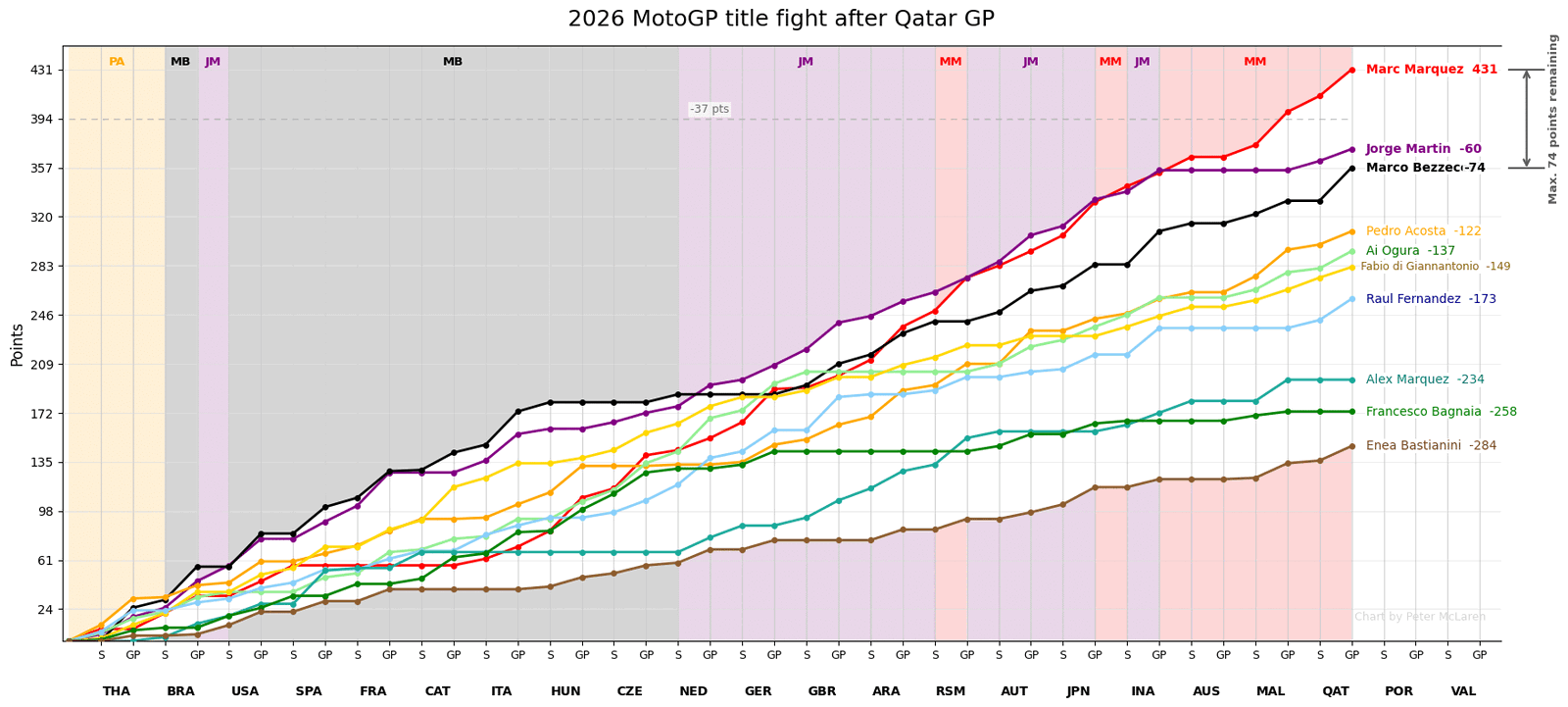
Bezzecchi responded by winning the Grand Prix, but the Sprint DNF cost him another seven points relative to Márquez over the race weekend. Dovizioso linked the incident to what he sees as the wider pattern of Bezzecchi’s season. He considers the Italian extremely strong, while also believing that crashes and high-risk decisions have repeatedly cost him opportunities.
Dovizioso’s argument is not that a faster rider should stop fighting for victories. It is that speed can create room for a less dangerous option. A move like this would be easier to justify on the final lap or the last two laps, when an opponent is closing every door and no alternative remains. In Qatar, neither Márquez nor Bezzecchi fully accounted for the other’s position, and once their lines crossed neither rider could control the outcome.
Dovizioso also pointed out that riders now lean farther away from the motorcycle, which further limits what they can see. His hope is that Bezzecchi will turn the incident into useful experience. Pace and an apparent passing opportunity are not always enough when the cost of the decision can be another result with no points.
THE STORY IN PHOTOS
3 photos
THE EVIDENCE BEHIND THE STORY
Sources
Spotted something that needs correcting? Contact the editorial team